Beautiful Beast research
For the Culture: How Multicultural Gen Z Creators Are Shaping Brand Narratives
A Beautiful Beast whitepaper on why multicultural Gen Z expects to help shape the stories brands tell.
Prepared by Quim Gil, Director of Cultural Insights.
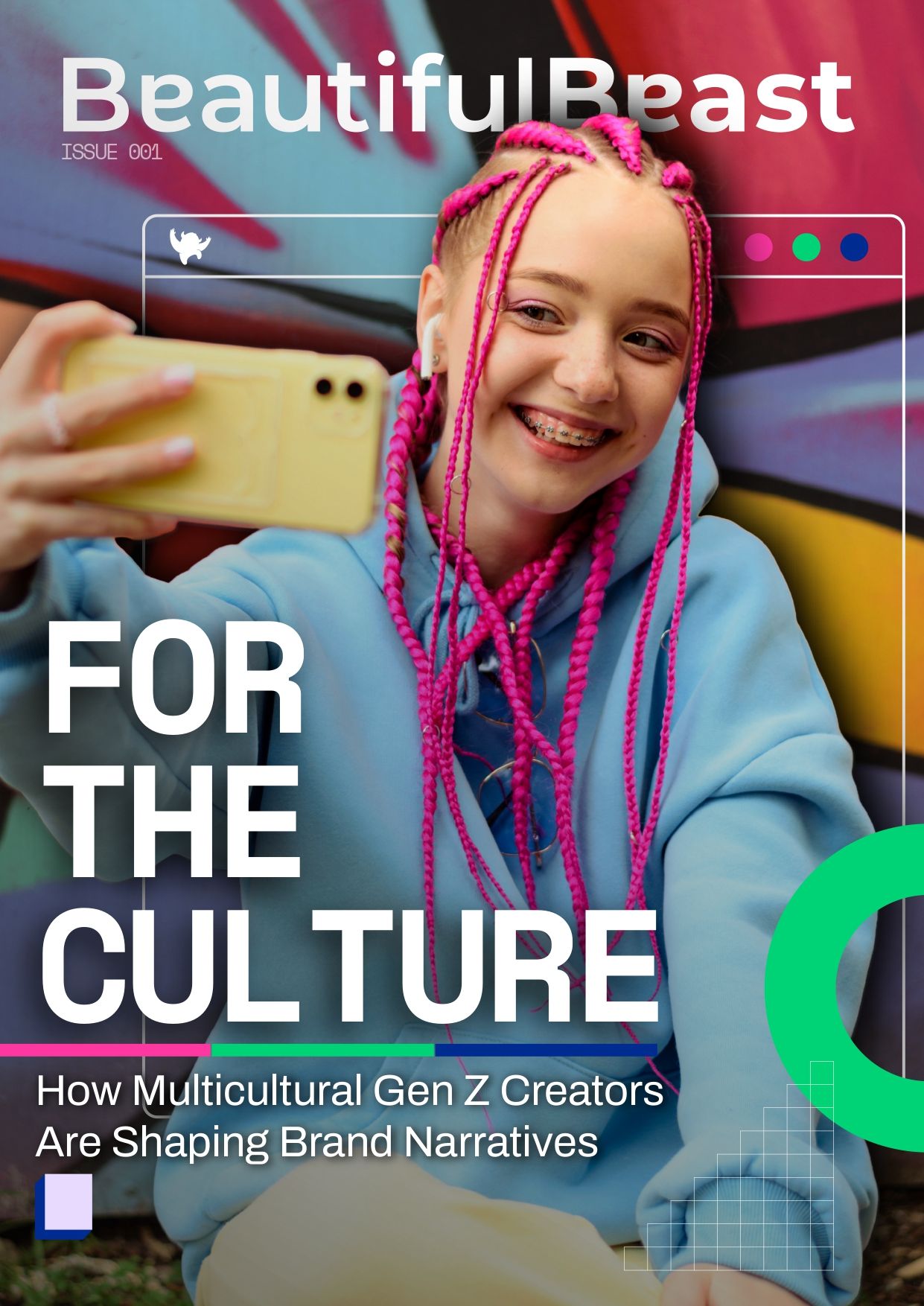
Multicultural Gen Z creators are not simply an audience. They are collaborators who expect a real role in the ideas, stories, and communities brands build.
Download the original For the Culture PDF
Introduction
Multicultural Gen Z is redefining the relationship between a brand and the people it hopes to reach. They do not want to be handed a finished story and asked to react. They want to help write it, remix it, share it, and see themselves in it.
For this generation, collaboration, cultural authenticity, and transparency are connected. Co-creation is not a campaign tactic added at the end of a process. It is a reflection of how creators participate in culture every day through community, fandom, identity, and self-expression.
The opportunity for brands is to move from speaking at young people to building with them. That shift can create work that is more relevant, more resilient, and more rooted in the communities that give culture its meaning.
The Rise of the Multicultural Gen Z Creator
Multicultural Gen Z creators move easily between cultures, languages, aesthetics, and communities. Their references are wide, but their point of view is specific. They make culture visible by connecting inherited traditions with the sounds, platforms, places, and people shaping life now.
Their influence is not limited to follower counts. They interpret what feels real, identify what is being overlooked, and give communities a vocabulary for their experiences. The strongest creators build trust because their work comes from lived context rather than a borrowed trend.
This is why brands need to value creators as cultural partners. Inviting them in after a brief is locked loses the insight that could have made the work resonate in the first place.
Co-Creation: The New Brand Imperative
Co-creation changes the power dynamic between brands and consumers. Instead of treating Gen Z creators as a distribution channel, brands bring them into ideation, design thinking, testing, and storytelling before the public sees a campaign.
Multicultural Gen Z can recognize the difference between a partnership that asks for a post and one that shares ownership. Meaningful collaboration makes room for creators to shape the brief, question assumptions, develop storylines, and influence the final work.
The result is not just more content. It is a stronger cultural competency inside the brand, built by listening to the people who know the community, the platform, and the creative language from the inside.
Real-World Examples: Co-Creation in Action
The report looks at brands that treat community participation as part of their operating model. Formula 1 grew Gen Z relevance through creators who made the sport more accessible and culturally visible. Coachtopia invited young designers and activists into product and sustainability conversations.
Duolingo turned an irreverent brand voice into a living exchange with its audience, while Rare Beauty built with young advocates and mental-health communities. In each case, the work went beyond casting a diverse face in an existing idea.
These examples show that co-creation can influence product, voice, community management, and creative direction. The common thread is a willingness to let culture shape the brand rather than only asking the brand to comment on culture.
Beautiful Beast Youth Panel Gen Z Insights
Beautiful Beast uses its Youth Panel to listen to Gen Z through the lens of motivations, identity expression, and cultural context. The goal is not to flatten people into demographic labels. It is to understand how they evaluate ideas, language, representation, and trust.
The panel helps explore new campaign ideas, test the tone of messages, and co-develop creative briefs before a brand invests in a public launch. This kind of listening turns audience research into a collaborative creative input.
For brands, the practical lesson is simple: proximity to culture requires an ongoing relationship. A single survey or a late-stage focus group cannot replace repeated, respectful exchange with the people shaping the conversation.
Strategies for Brands: A Co-Creation Playbook
Start co-creating from day one. Bring creators into the earliest conversations, let them challenge the brief, and give them room to propose ideas rather than only respond to them.
Build a community, not a roster. Long-term relationships create the trust needed for honest feedback and help brands understand the context behind a reaction. Share creative credit openly, make the process visible, and treat transparency as a feature of the work.
Measure more than reach. Save rates, story replies, remix behavior, cultural relevance, and the quality of conversation can reveal whether a partnership is creating durable connection instead of a temporary spike in attention.
Call to Action
Culture cannot be manufactured on demand. Brands that want to remain relevant need to work with the communities and creators who are already making it move.
Beautiful Beast helps brands work directly with Gen Z creators, use Youth Panel insights, and build strategies that are community-rooted. The aim is not to chase a moment. It is to participate with purpose in the culture that shapes the future.